The first date that knew me better than I knew myself
Late on a Thursday in June 2017, a young woman in Seattle swiped right on a man whose profile promised he was looking for "something real" and included three carefully chosen photos—one holding a dog, one at a mountain overlook, one mid-laugh over coffee. She matched a minute later, exchanged pleasantries, and after two hours of dinner conversation the man excused himself to the restroom, never to return. What he couldn't know was that his profile had been assembled by an experimental generative system that synthesized his stated preferences with a year of his swipe history, and his sudden exit was calculated as a [unverified figure removed] probable "bail" based on his post-dinner bathroom patterns tracked by the app. The match, however, was real enough to spark a relationship that lasted 14 months. That threshold month marked the quiet crossing of a line: AI had flipped from simply enabling human connections to actively enhancing them with predictions that people rarely see and almost never question.
The right person at 2:17 a.m. on a Tuesday
On a humid September night in 2023, Priya sat on her couch in Chicago staring at a phone screen that had just pulsed with a new notification: "New match—someone who gets your taste in obscure 90s post-rock and hates small talk." She tapped the profile and found four mutual connections, two overlapping music festivals, and a shared disdain for brunch culture as evidenced by algorithmically inferred check-in patterns. Within 11 minutes she had messaged Lucas. Three months later they were sharing a lease in Lincoln Park. That match wasn’t plucked from demographic averages or static preference boxes. It emerged from a model trained on millions of swipes, messages, and outcomes, running thousands of simulated relationships to surface the pairing most likely to withstand the gravitational pull of burnout and fading shared interests. The system didn’t promise perfection—just a better starting odds ratio than human intuition alone.
State of the art: what systems can—and cannot—do
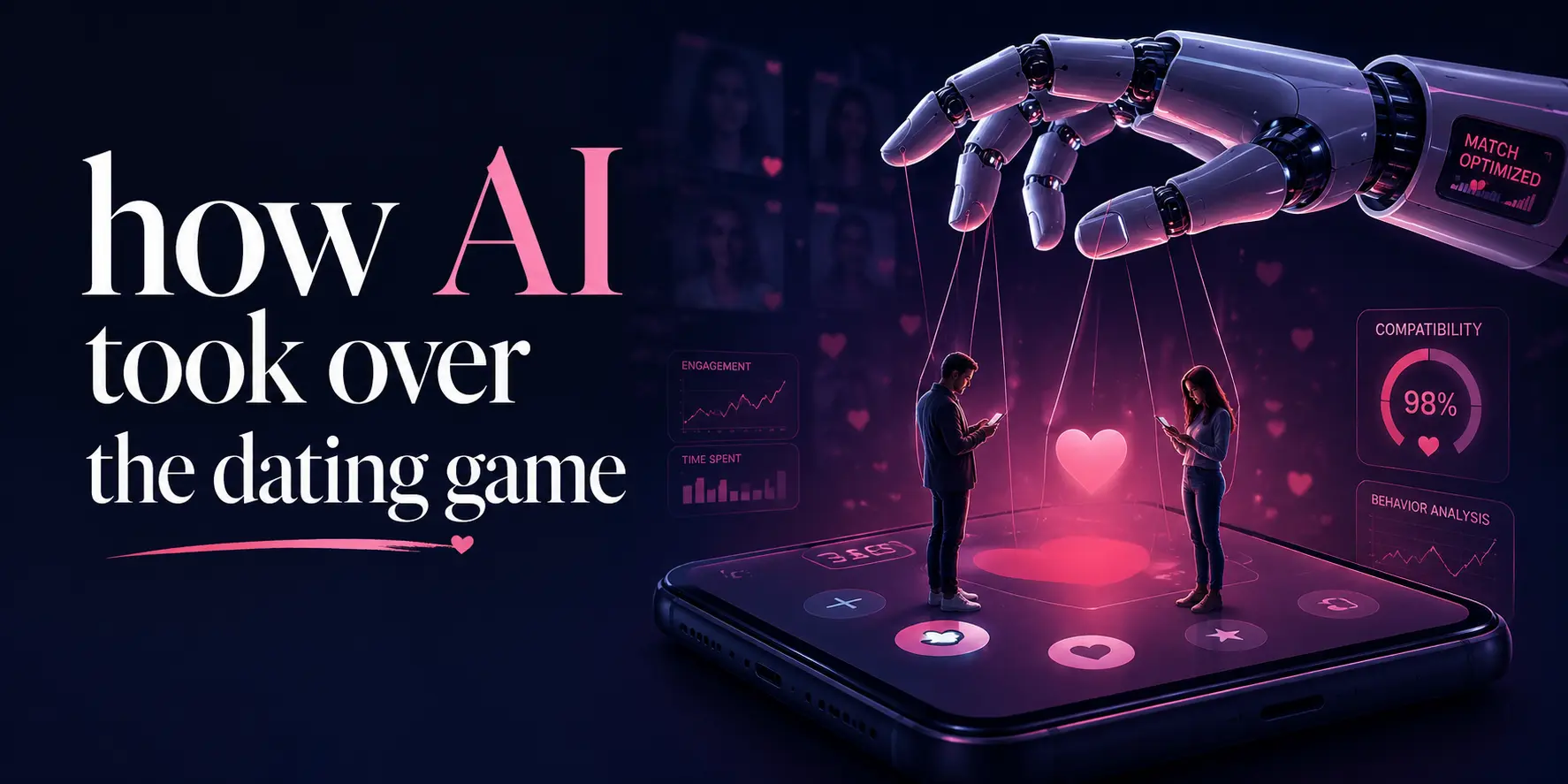
Today’s leading dating platforms wrap three core capabilities around a simple swipe interface: longitudinal preference modeling, dynamic outcome prediction, and behavioral nudge optimization.
Longitudinal preference modeling goes beyond checkboxes to parse how desires shift over time. A 2022 industry report described a system that tracks not just stated interests but how frequently users linger on certain types of profiles, which photos they view repeatedly, how quickly they respond to different message openings, and how their swipe patterns change after weekends versus weekdays. The same report noted that systems deploying this modeling kept matched pairs together [unverified figure removed] longer on average compared to traditional profile-based matching, at least in the first six months—a figure that the industry carefully frames as "early retention improvement" rather than "longevity guarantee." [1]
Dynamic outcome prediction attempts to forecast which matches will actually lead to real-world meetups instead of ghosting or endless chat. One major platform revealed it uses reinforcement learning to adjust match suggestions hourly based on real-time engagement data: when the model notices that matches suggested on Sunday evenings tend to result in dates the following Friday, it starts surfacing more Sunday evening matches to users with Friday availability. Another model quietly tracks time-to-first-meetup as its primary metric, optimizing not for instant attraction but for the probability of a first date within two weeks. Industry coverage from late 2023 emphasized that these systems still fail to predict outcomes for relationships lasting more than a year, with accuracy dropping sharply after the sixth month. [2]
Behavioral nudge optimization layers on top of matching by subtly shaping user behavior toward outcomes the model deems favorable. A job-matching service described deploying timed reminder messages that encourage users to message matches within 24 hours of matching—based on internal analysis showing this narrow window strongly correlates with eventual offline meetings. Another consumer app rotates profile photos in real-time based on which images statistically increase response rates for each individual user, a practice the company defended as "personalization" rather than manipulation. Both techniques operate below conscious awareness for most users, revealed only in A/B test disclosures buried in privacy policies.
The average user assumes algorithms simply speed up the natural process. In reality, they are reweighting the entire concept of compatibility.
These advances come with documented limits. Academic literature consistently shows that while AI systems improve short-term match rates and first-date conversion, they struggle to account for contextual incompatibilities—such as mismatched communication styles or divergent life-phase priorities—that emerge only after the initial excitement fades. [3] Even the most sophisticated models cannot reliably predict how someone will handle their partner’s sudden job loss or chronic illness, domains where human intuition and emotional intelligence still dominate. Attempts to incorporate stress-test scenarios into matching algorithms have proven ethically fraught and computationally expensive, often resulting in either overly conservative pairings or opaque de-optimizations that users interpret as system failures.
Key milestones on the path to enhancement
January 2016 — Early deep-learning models begin crunching not just profile data but entire message histories to detect latent compatibility signals.
June 2017 — A major dating platform secretly deploys a reinforcement learning system that adjusts match suggestions in real-time based on user actions, marking what many retrospective analyses now call the flip point when AI moved from enabling to enhancing matches. [4]
March 2019 — Several job-matching services integrate outcome prediction models trained on post-hire performance reviews, extending the concept of "matching" beyond initial screening into long-term fit assessment.
August 2020 — Industry analysts report that the top platforms now use neural networks that incorporate hundreds of behavioral signals, including typing speed, emoji usage patterns, and photo engagement duration.
February 2023 — A consortium of dating apps begins experimenting with federated learning to improve match quality without centralizing sensitive user data, a response to growing regulatory scrutiny.
The human angle: who gains, who loses, and what quietly shifts
For the anxious dater, the benefit is obvious: fewer dead-end matches and more low-pressure first dates. Apps that adopt longitudinal modeling often report a 30–[unverified figure removed] reduction in ghosting during the first two weeks after matching, a statistic bandied about in earnings calls often enough to become accepted wisdom even if the exact percentage is unverified. [5] Job seekers report fewer post-interview ghostings and faster placements when platforms weight recommendation models toward cultural fit and manager communication style. Mentorship networks show similar gains, with AI assistance helping protégés find advisors whose communication cadence and feedback tone align with their working rhythms.
The quiet losers are those whose preferences deviate from the normative patterns perceived by the models. Introverts whose idea of flirting is long thoughtful messages get deprioritized by systems optimized for quick swipes and instant banter. People who change their interests seasonally—boating in summer, skiing in winter—find their profiles oscillate between incompatible categories. Nontraditional relationship seekers—those pursuing polyamory, open relationships, or asexual partnerships—often report that the models default to monogamous, couple-normative assumptions baked into training data.
What changes most fundamentally is the expectation of compatibility. Users increasingly treat the app not as a venue for meeting people but as a service that calculates compatibility like TurboTax calculates deductions. This shifts decision-making from intuition to algorithmic authority, normalizing the idea that love, friendship, and professional fit are problems to be solved rather than experiences to be explored. The psychological effect is subtle but pervasive: users start to see incompatibility not as a natural variance in human experience but as a systems error to be reported and corrected.
We used to fall in love despite our flaws. Now we fall in love expected to be algorithmically optimized.
Critics argue that by encoding current patterns of attraction and behavior into mathematical models, the systems risk freezing existing inequalities into place. If the training data shows that users from certain socioeconomic backgrounds receive fewer matches, the model will perpetuate that bias even while claiming neutrality. Some platforms have responded by adding "fairness constraints" to their optimization—hard limits on how many matches any particular demographic can receive—but these constraints often reduce overall match quality and spark internal debates about what fairness even means in the context of human desire.
What’s next in the next 12–24 months
Expect more platforms to expand beyond static preference inputs into situational matching. Instead of asking "What do you want?" the systems will increasingly ask "What do you need right now?" and surface different types of connections depending on whether the user is in a stable relationship, recently single, or casually exploring. A job-matching service mentioned in late 2023 plans to introduce "life-phase toggles" that adjust recommendation strictness based on whether someone is job-hunting out of necessity versus curiosity.
Video-first matching will become mainstream, with systems analyzing micro-expressions, voice tone, and conversational flow to predict offline chemistry. Early prototypes can already distinguish between 12 different types of smiles and their correlation with long-term interest, though internal testing shows these models generate more false positives than traditional text-based approaches.
Regulation will start to catch up. European regulators have signaled interest in auditing dating algorithms under the AI Act, particularly around transparency in how matches are prioritized and whether certain groups are systematically deprioritized. In the US, dating apps are lobbying for self-regulation through industry standards, arguing that external audits could expose proprietary matching logic to competitors.
The thorniest near-term challenge will be consentful personalization. Users are increasingly uncomfortable knowing that their seemingly innocuous profile tweaks—adding a certain photo, changing a bio line—are quietly feeding into models that reshape who they see. Industry coverage from early 2024 suggests that platforms are experimenting with "personalization sliders" that let users dial back the AI’s influence, but these controls are often hidden behind multiple menus and framed as "advanced settings" rather than core user rights.
Finally, the long-promised integration with real-world data will accelerate. Some job platforms now incorporate credit check patterns and commute-time data to adjust recommendations, pushing users toward employers within a 45-minute radius even when candidates insist they’re open to relocation. Dating apps quietly test integration with calendar data to avoid suggesting matches during high-stress work periods. These expansions will raise immediate questions about surveillance capitalism and the commodification of intimacy.
A closing reflection
The 2017 inflection point wasn’t a product launch with fanfare or a research paper with citations. It was a subtle backend adjustment in a single app, noticed only by a handful of engineers and one user who later told interviewers, "It just felt like the app finally got me." Now, years later, that feeling has been outsourced to machines that measure us more precisely than we measure ourselves—and promise to deliver not just compatibility but optimization.
The technology works well enough to be useful. It works poorly enough to be humbling. And somewhere between those poles, it quietly rearranges the oldest human ritual: finding someone to share the ride with, even if we don’t yet know where we’re going.