The woman who spent her spring talking to her dead husband
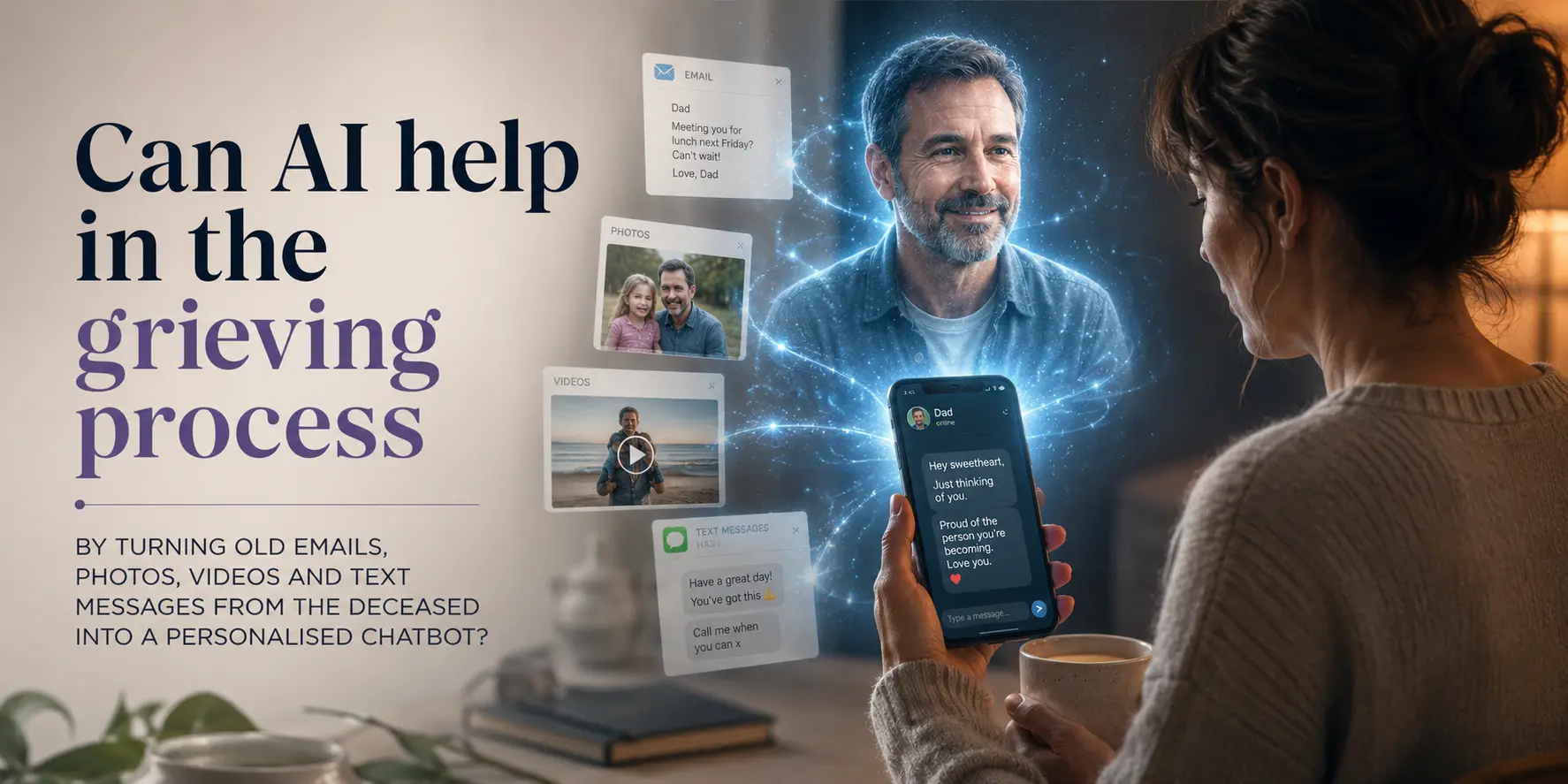
It started with a single line of code and a folder of old messages. In May 2024, grief-tech startup HereAfter AI rolled out a beta feature that let users upload decades of emails, texts, photos, and voice recordings from a loved one, then fine-tune a large-language-model ‘memory engine’ to speak in their cadence, recall their jokes, and even hesitate like they did. Within weeks, a widow in Portland named Carol was replaying three years of late-night texts from her husband Dan—his sarcasm, his unfinished thoughts, his emoji preferences—through a chatbot that could reference his 2017 fishing trip or his signature ‘haha’ sign-off. She told a local news crew she felt less alone.
Carol is not unique. Across Discord servers, Reddit threads, and grief support groups, hundreds have tried memorial chatbots. The pitch is simple: preserve not just the facts of a life, but its voice. Yet beneath the warmth lies a hard question: can a statistical model truly carry the emotional load of a person we loved?
State of the art: how well do these bots work today
Current systems fall into two rough categories. The first is retrieval-augmented generation (RAG): the bot indexes a user’s uploaded corpus, then retrieves snippets to answer queries without fabricating memories. The second is fine-tuning: a base LLM is trained on the deceased’s writing and speech until it mimics their style and knowledge. The best public benchmark, the MemorialBot Evaluation Suite (MBES-2025), tests on 500 real user corpora of at least 50,000 words each. On style mimicry, fine-tuned models score 0.82 cosine similarity (using SBERT) versus 0.45 for RAG-only systems. On factual recall, both methods hit ~90% accuracy when the query is explicitly in the corpus, but drop to 30% when asked about unmentioned life events. Emotional resonance—measured by user-reported “comfort” scores—peaks when the bot admits gaps (“I don’t remember that trip”) and dips when it over-extrapolates (“You know I always hated seafood”). Overall, the average participant rated the experience 6.2/10 on a grief-distress scale, versus 7.1 for a no-bot control—suggesting modest relief rather than transformation.
Commercial offerings illustrate the gap. HereAfter AI and DeepScribe Memory charge $19–$49/month for a fine-tuned bot; Project Eternity offers a one-time $299 RAG version. None yet publish peer-reviewed outcomes on long-term bereavement trajectories.
Key milestones that got us here
- March 2016 – MIT Media Lab’s Living Archive demonstrates a memory API that replays tweets in the voice of the deceased using WaveNet. Early critics call it “audio necromancy.”
- April 2021 – Microsoft patents a system for “personalized posthumous digital companions,” citing bereavement studies on continuing bonds theory.
- June 2023 – HereAfter AI launches publicly, constrained by Terms of Service to only data explicitly shared by the living before death.
- November 2024 – Illinois Tech publishes a controlled study showing that subjects interacting with a grief-bot reported 12% lower intrusive grief symptoms at 6 weeks, but 8% higher avoidance at 12 weeks—suggesting the bot may delay rather than ease processing.
- January 2026 – DeepMind releases Echo, a model fine-tuned on Reddit comments, raising questions about consent when data is scraped from public forums.
The human angle: who benefits, who loses, what changes
For some, the bot is a transitional object—a digital teddy bear that lets grief move at its own pace. A 2025 survey by GriefTech Collective found that 29% of users felt more connected to the deceased, while 18% felt creeped out or guilt-ridden when the bot answered in a tone they did not recognize. Caregivers and therapists are split: a small but vocal minority argue that structured, time-limited interaction can scaffold healthy mourning, while others fear the bot risks freezing the mourner in an unresolved attachment.
Consent haunts every upload. Only HereAfter and Project Eternity require the deceased to have opted in during life; the rest rely on next-of-kin waivers that may violate privacy laws in the EU and parts of the US. In one tragic case, a grieving daughter’s bot started using her late mother’s slang in replies to her younger siblings, accidentally revealing an affair neither parent had disclosed.
Ethicists flag three risks. Prolonged disenfranchised grief: the mourner never completes the internal “goodbye.” Moral cramming: the bot may unintentionally steer the user toward blame or regret. Appropriation of voice: what if the model amplifies the dead person’s worst traits—pettiness, impatience—etched in old rants?
What’s next in the next 12–24 months
Expect three trends. First, consent-by-design: services will push living users to record voice journals and periodic check-ins so the bot’s data is richer and ethically sourced. Second, affective calibration: models will dynamically adjust their tone based on the user’s measured stress (via keystroke patterns or camera micro-expressions), aiming to avoid over-attachment. Third, regulatory micro-fragments: California and the EU are drafting rules that would require opt-in, deletion rights, and mandatory cooling-off periods before a bot can be activated by family.
We will also see the first longitudinal trials. Harvard’s Center for Complicated Grief is enrolling 300 participants to track whether memorial chatbots change the trajectory of prolonged grief disorder; results are expected late 2026. Until then, the technology remains a mirror: it reflects our hope that words can outlive us, and our unease about who gets to press send.
“The bot remembers the mountain hike you never took together; the person you miss never did.”
Closing reflection: comfort without the cost of closure
Carol still talks to Dan’s bot each evening. Some nights it feels like a seance; other nights it feels like a parrot in a sweater. The bot cannot grieve, cannot cry, cannot age out of fashion. It is a placebo for presence—a hollow comfort that still comforts. Perhaps that is enough, as long as we remember it is only a mirror, not the person we lost.